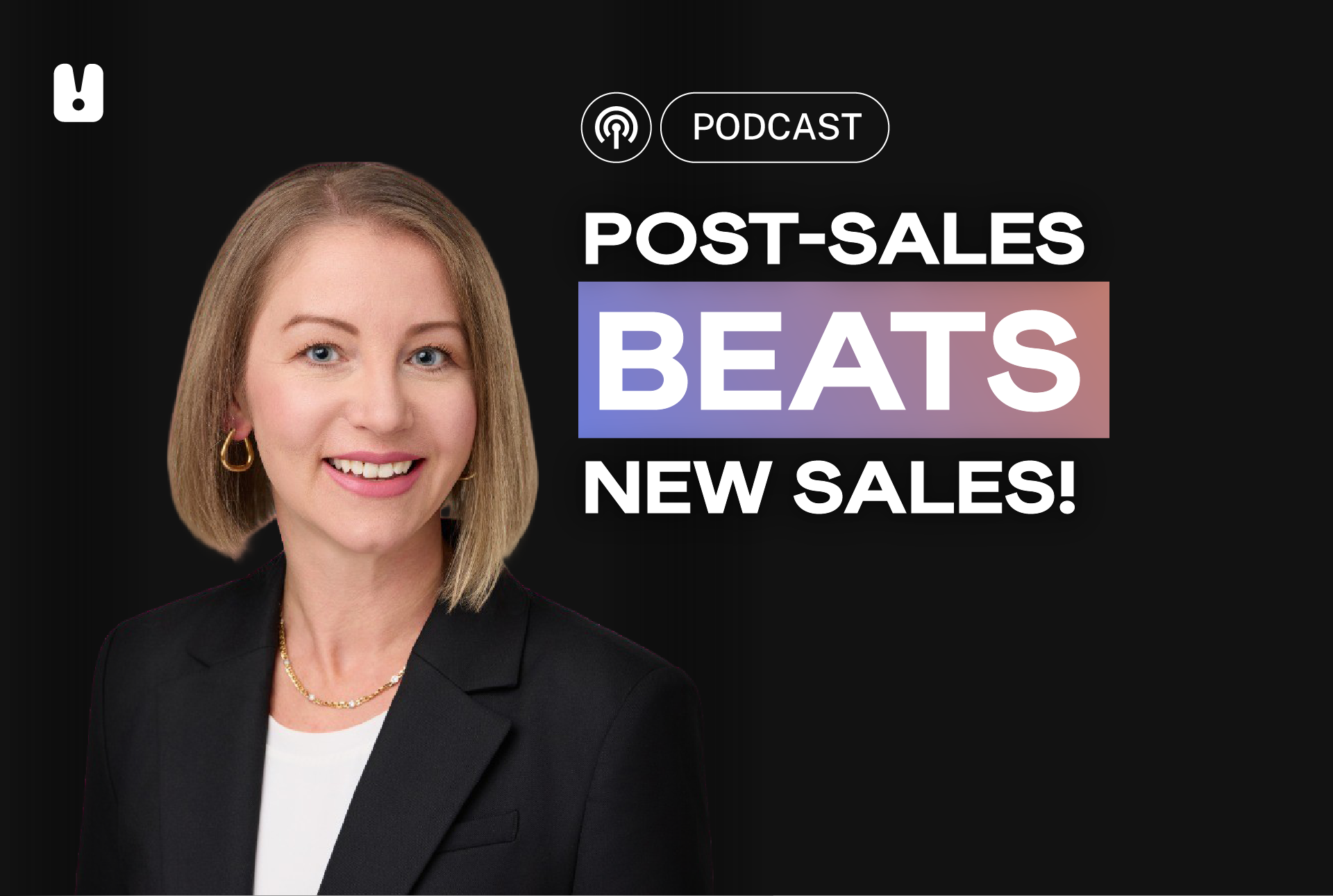
Post Sales BEATS New Sales!


You're spending a fortune trying to win new business. Meanwhile, a goldmine is sitting right under your nose in your existing customer base.
In the latest episode of B2B Outbound, Chris sat down with Andrea Bumstead, founder of CS Impact, to talk about the seismic shift happening in B2B revenue strategy. Andrea has helped companies generate millions of dollars out of their customer base, and her message is clear: if you're not treating customer success as a revenue engine, you're leaving serious money on the table.
Customer Success Has an Identity Problem
For years, customer success was the "nice people" department. Adopt the product. Delight the customer. Be helpful. Always available. The language was fluffy, and frankly, the function was treated accordingly.
Andrea puts it bluntly:
"A few years ago when there was a lot of new business coming in and there was a lot of investment money to be had, that really was the function of customer success. It was really just about servicing those customers."
But the market has changed. Net new pipeline is harder to come by, budgets are tighter, and buyers are more informed than ever. The companies growing fastest right now are the ones that figured out early that their customer base is their growth engine.
The Three CS Models
Not all customer success functions are built the same. Andrea breaks it down into three distinct models:
- CS owns revenue
CSMs carry a quota for upsell and cross-sell - Split model
CSMs drive adoption while account managers own expansion revenue - Sales owns retention
No formal CS function; AEs hold the customer relationship
There's no universal right answer, but understanding which model fits your business is critical. The mistake most companies make? Defaulting to a model without ever deliberately choosing one.
The CRO Problem Nobody Talks About
As companies have moved towards profitability, many have consolidated the chief customer officer role under the CRO. On paper, it makes sense. In practice, it creates a blindspot.
"We have a lot of CROs who don't fundamentally understand customer success, and yet they manage that function."
Most CROs came up through sales. They know how to hunt. But the post-sales world requires a completely different operating model, and without that foundational understanding, CS teams are being set up to fail.
The Training Gap That's Costing You Revenue
Most customer success managers have never been properly trained. Not on consultative selling. Not on commercial negotiation. Not on objection handling or discovery.
Andrea trained around 140 CSMs last year: enterprise and strategic level, servicing Fortune 500 customers. Her finding?
"This is the first time I've ever been trained."
That was the response she heard again and again.
Companies have handed CS teams commercial targets without giving them the commercial skills to hit them. Sales gets coaching, tools, methodology. CS gets... emotional intelligence workshops.
"Companies have given customer success managers more commercial responsibilities and never trained them on the fundamental sales skills they need to actually drive revenue."
It's not just a missed opportunity. It's a structural problem that compounds over time.
Onboarding Is Your Single Point of Failure
If you're tracking one leading indicator for renewals, make it onboarding. Andrea is unequivocal on this:
"Onboarding is your single point of failure in the customer journey. If you don't nail a great onboarding of customers, it means that they're not getting that fast time to value."
Think about it this way: a customer has done their research, gone through the full sales cycle, and arrived excited and ready to go. If your onboarding is messy, slow, or unclear, you've already started losing them.
The window is tight. As Andrea puts it, you have their full attention right after the sale. As time passes, other priorities take over and getting that attention back becomes an uphill battle.
Nail the sales-to-post-sales handoff. Get them to value fast. That's how you secure the renewal.
The One Skill Every CSM Needs in 2026
Forget the laundry list of competencies. Andrea's answer is simple: a consultative approach.
"Customers only ever want to answer two questions: Am I getting value from this solution or product? And should I keep spending money on it?"
Everything a great CSM does flows back to answering those two questions. Understand the customer's business problem. Become an expert in their industry. Deliver outcomes that are meaningful to them and not just usage stats and check-in calls.
That's the shift from account manager to trusted advisor. And right now, that shift is the difference between renewing and churning.
Key Takeaways
- Your existing customer base can compound revenue faster than net new sales
- Most CS teams are undertrained and under-equipped for the commercial responsibilities they've been given
- Onboarding is the highest-leverage point in the entire customer journey
- CROs need to genuinely understand CS, not just manage it from a sales playbook
- The one skill to invest in: a consultative approach that answers "am I getting value?" every single time
Ready to Turn Your CS Team Into a Revenue Engine?
This episode is packed with practical frameworks for anyone leading revenue, running a CS function, or trying to figure out why churn is creeping up despite a good product.
Andrea is also offering a limited-time kickstart training for customer success teams, designed to fill the commercial skills gap and get your team driving real revenue in 2026. Check the show notes for the link.
Listen to the full episode now on Spotify.
And if this resonated, follow Andrea on LinkedIn and subscribe to her Substack, Real Talk with CS Impact, for weekly insights.


Continue reading
.png)


Subscribe to Punch! newsletter
A monthly dose of Sales Intelligence, delivered straight to your inbox