Back to all blogs
Blog Details

Subscribe to Punch! newsletter

Stay in the loop with updates, ideas, and resources.

Thank you! Your submission has been received!
Oops! Something went wrong while submitting the form.
5 min read
Published
25 Aug 2026
5 min read
Published
28 Jul 2026

Why Your SDRs Should Never Touch a Spreadsheet Again

Chris Muldoon

Chief Executive Officer
Last updated
25 Aug 2026
AI summary
Contents

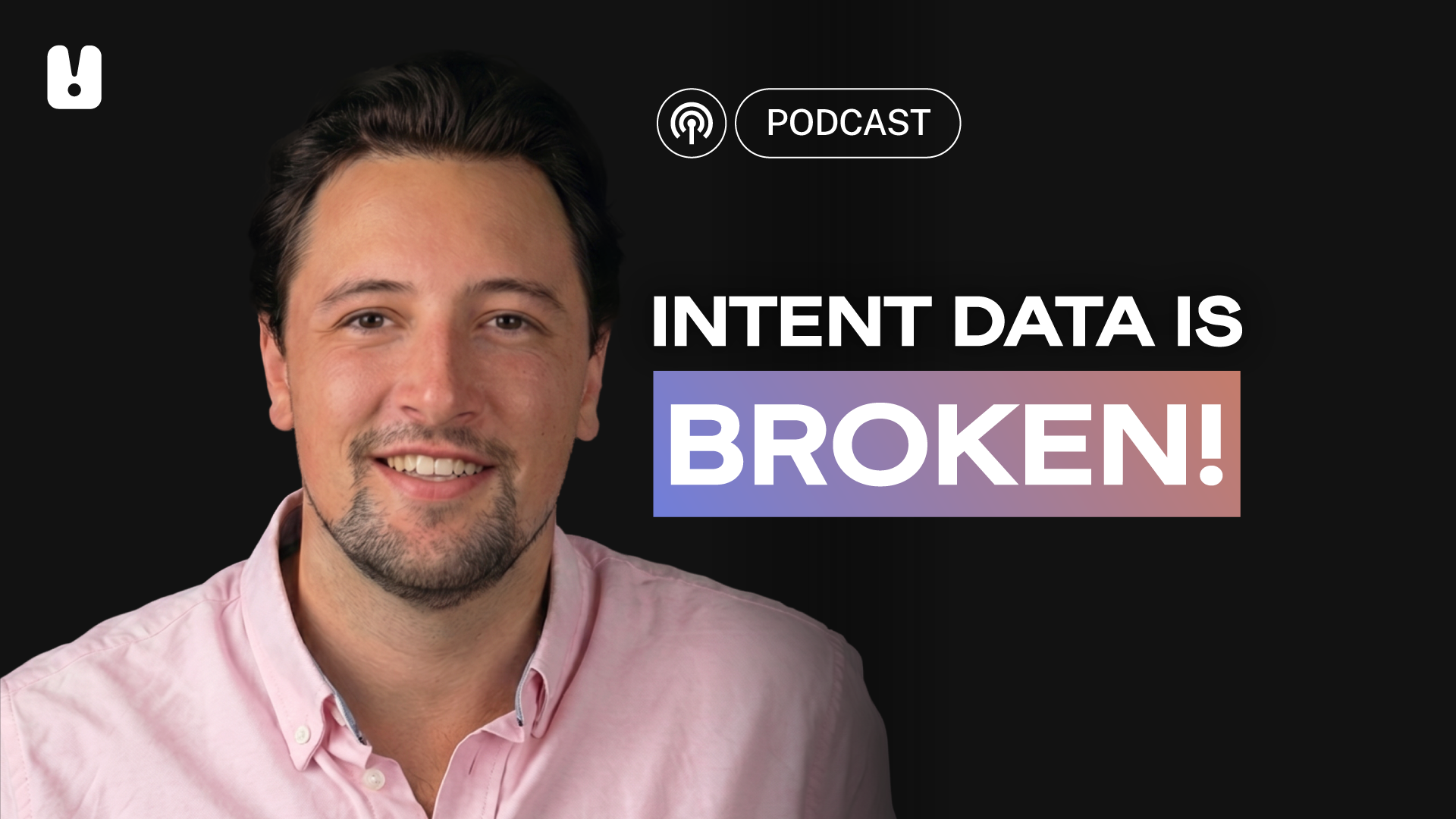
On the latest episode of B2B outbound, Chris sat down with Zeno Farhat, a go-to-market (GTM) engineer who has spent the past three years building the systems that sit behind modern sales teams. Zeno started his career as an account executive, then worked through prospecting, cold outbound, closing, and training SDRs (sales development representatives) before becoming head of GTM engineering at an agency. He has since worked in-house at several startups, and is moving into a new role as an AI growth engineer at what he describes as an AI-native healthcare startup.

This conversation moves fast, and covers signals, tooling, and where Zeno thinks the build-versus-buy debate is heading.

What is GTM engineering, really?

Ask ten people what GTM engineering means and the answers will vary widely. Zeno's definition is more specific, a discipline that spans outbound, inbound, and revenue operations, using internal and external signals with the goal of maximizing sales and marketing efficiency.

He takes it further, the goal is to unify the information that different departments already hold, so an account executive or customer success manager can act on it without hunting for it themselves.

"I see GTM engineering becoming context engineering."

Two types of signals, not twenty

A lot of the confusion in this space comes from tool sprawl. Everyone is tracking something, and it all gets filed under "intent." Zeno's view cuts through that:

"There are only two types of signals."

He splits them into external signals, meaning market-level activity such as a company hiring at pace or raising a funding round, plus what competitors are doing, and internal signals, meaning information the company already owns. That includes product usage data and the context buried in sales call transcripts. He also points to how prospects engage with a founder's LinkedIn posts as an example most teams overlook. Of the two, he argues internal signals get the least attention, particularly product data and call context.

The bigger issue, in his view, isn't a shortage of signals. It's teams tracking signals for the sake of tracking them, rather than because those signals actually matter to their ideal customer profile (ICP). Many providers are pulling the same handful of data points and calling it insight, regardless of whether it means anything to the buyer on the other end.

The signal is only half the job

Having the right signal doesn't help much if the follow-up message is generic. Zeno's example, a company notices a prospect is hiring for a specific role, then sends an email that simply states they noticed the hire. Everyone can see the same job posting, so everyone sends a version of the same message.

"It's also about how you use the signal."

His suggestion is to dig one level deeper.

What does the job description actually reveal about the problem the company is trying to solve? That detail is where most outreach falls short.

Adoption is still catching up

Given how much attention GTM engineering gets, it may be surprising that adoption is still low. Zeno puts that down to timing more than resistance.

"Signal tracking is something that's relatively new."
He expects adoption to accelerate as more teams build repeatable frameworks around signals. Asked how many teams still handle prospecting by hand, his answer was direct:
"The majority of them, like 90 percent, still do manual prospecting."

That's Zeno's own read from recent conversations with companies, not an independently verified figure, but it lines up with how much manual work still sits underneath tools that are supposed to have automated it.

Zeno's take on Clay

One of the more direct parts of the conversation is Zeno's view on tooling. He's upfront that Clay is one of the best-known platforms in the space, calling it "by far the greatest GTM tool out there." At the same time, he's built his own version of it, along with a second custom tool, arguing that once you understand the underlying logic, a purpose-built system can be cheaper to run and easier to adapt than an off-the-shelf platform.

His caveat, this only works if you already know what you're doing. For a team without that expertise, buying remains the safer route, and he's clear that building a CRM (customer relationship management) system from scratch is not something he'd recommend to anyone.

"I would not choose to build my own CRM."

His advice for anyone trying to break into the role, including a software engineer who messaged him on LinkedIn asking how to make the switch: start with Clay, but treat it as a way to learn by solving one real problem, such as building a highly targeted ICP (ideal customer profile) list, rather than learning the tool for its own sake.

The one job an SDR should have

Perhaps the clearest point in the episode is Zeno's stance on where AI and automation belong in the sales process. He argues prospecting, research, data enrichment, and CRM admin should be fully automated, so the SDR's day is built around one thing.

"The only job that an SDR should do is just calling. Nothing else."

That view lines up with how Punch!, a human SDR managed services firm, has approached its own evolution, automate the manual research and data work, and keep the phone conversation as the part only a person can do well.

Actionable takeaways

  • Split your signals into two buckets, external and internal, before adding another tool to the stack
  • Use a signal to inform the message, not to become the message
  • If you're starting out in GTM engineering, pick one real problem to solve, such as building a highly targeted ICP list, rather than learning tools in the abstract
  • When hiring for the role, look for a systems mindset over tool proficiency

Listen to the full episode

This is a fast-moving conversation, and Zeno covers plenty more on tooling, hiring, and where he sees the GTM engineer role heading over the next two years. Catch the full episode of B2B Outbound on YouTube and Spotify.

On the latest episode of B2B outbound, Chris sat down with Zeno Farhat, a go-to-market (GTM) engineer who has spent the past three years building the systems that sit behind modern sales teams. Zeno started his career as an account executive, then worked through prospecting, cold outbound, closing, and training SDRs (sales development representatives) before becoming head of GTM engineering at an agency. He has since worked in-house at several startups, and is moving into a new role as an AI growth engineer at what he describes as an AI-native healthcare startup.

This conversation moves fast, and covers signals, tooling, and where Zeno thinks the build-versus-buy debate is heading.

What is GTM engineering, really?

Ask ten people what GTM engineering means and the answers will vary widely. Zeno's definition is more specific, a discipline that spans outbound, inbound, and revenue operations, using internal and external signals with the goal of maximizing sales and marketing efficiency.

He takes it further, the goal is to unify the information that different departments already hold, so an account executive or customer success manager can act on it without hunting for it themselves.

"I see GTM engineering becoming context engineering."

Two types of signals, not twenty

A lot of the confusion in this space comes from tool sprawl. Everyone is tracking something, and it all gets filed under "intent." Zeno's view cuts through that:

"There are only two types of signals."

He splits them into external signals, meaning market-level activity such as a company hiring at pace or raising a funding round, plus what competitors are doing, and internal signals, meaning information the company already owns. That includes product usage data and the context buried in sales call transcripts. He also points to how prospects engage with a founder's LinkedIn posts as an example most teams overlook. Of the two, he argues internal signals get the least attention, particularly product data and call context.

The bigger issue, in his view, isn't a shortage of signals. It's teams tracking signals for the sake of tracking them, rather than because those signals actually matter to their ideal customer profile (ICP). Many providers are pulling the same handful of data points and calling it insight, regardless of whether it means anything to the buyer on the other end.

The signal is only half the job

Having the right signal doesn't help much if the follow-up message is generic. Zeno's example, a company notices a prospect is hiring for a specific role, then sends an email that simply states they noticed the hire. Everyone can see the same job posting, so everyone sends a version of the same message.

"It's also about how you use the signal."

His suggestion is to dig one level deeper.

What does the job description actually reveal about the problem the company is trying to solve? That detail is where most outreach falls short.

Adoption is still catching up

Given how much attention GTM engineering gets, it may be surprising that adoption is still low. Zeno puts that down to timing more than resistance.

"Signal tracking is something that's relatively new."
He expects adoption to accelerate as more teams build repeatable frameworks around signals. Asked how many teams still handle prospecting by hand, his answer was direct:
"The majority of them, like 90 percent, still do manual prospecting."

That's Zeno's own read from recent conversations with companies, not an independently verified figure, but it lines up with how much manual work still sits underneath tools that are supposed to have automated it.

Zeno's take on Clay

One of the more direct parts of the conversation is Zeno's view on tooling. He's upfront that Clay is one of the best-known platforms in the space, calling it "by far the greatest GTM tool out there." At the same time, he's built his own version of it, along with a second custom tool, arguing that once you understand the underlying logic, a purpose-built system can be cheaper to run and easier to adapt than an off-the-shelf platform.

His caveat, this only works if you already know what you're doing. For a team without that expertise, buying remains the safer route, and he's clear that building a CRM (customer relationship management) system from scratch is not something he'd recommend to anyone.

"I would not choose to build my own CRM."

His advice for anyone trying to break into the role, including a software engineer who messaged him on LinkedIn asking how to make the switch: start with Clay, but treat it as a way to learn by solving one real problem, such as building a highly targeted ICP (ideal customer profile) list, rather than learning the tool for its own sake.

The one job an SDR should have

Perhaps the clearest point in the episode is Zeno's stance on where AI and automation belong in the sales process. He argues prospecting, research, data enrichment, and CRM admin should be fully automated, so the SDR's day is built around one thing.

"The only job that an SDR should do is just calling. Nothing else."

That view lines up with how Punch!, a human SDR managed services firm, has approached its own evolution, automate the manual research and data work, and keep the phone conversation as the part only a person can do well.

Actionable takeaways

  • Split your signals into two buckets, external and internal, before adding another tool to the stack
  • Use a signal to inform the message, not to become the message
  • If you're starting out in GTM engineering, pick one real problem to solve, such as building a highly targeted ICP list, rather than learning tools in the abstract
  • When hiring for the role, look for a systems mindset over tool proficiency

Listen to the full episode

This is a fast-moving conversation, and Zeno covers plenty more on tooling, hiring, and where he sees the GTM engineer role heading over the next two years. Catch the full episode of B2B Outbound on YouTube and Spotify.

contributors
Chris Muldoon
Chris Muldoon
Chief Executive Officer
Expertise
other Articles

Continue reading

6
min read
Published
21 Aug 2026
What Is GTM Orchestration?
Smart sales tech

What Is GTM Orchestration?

Chris Muldoon

Chief Executive Officer
Last updated
21 Aug 2026
6
min read
Published
07 Aug 2026
Why Human SDRs Still Win in Regional Markets
No items found.

Why Human SDRs Still Win in Regional Markets

Last updated
07 Aug 2026

Subscribe to Punch! newsletter

A monthly dose of Sales Intelligence, delivered straight to your inbox

Thank you! Your submission has been received!
Oops! Something went wrong while submitting the form.