Back to all blogs
Blog Details

Subscribe to Punch! newsletter

Stay in the loop with updates, ideas, and resources.

Thank you! Your submission has been received!
Oops! Something went wrong while submitting the form.
5 min read
Published
03 Mar 2026
5 min read
Published
03 Mar 2026

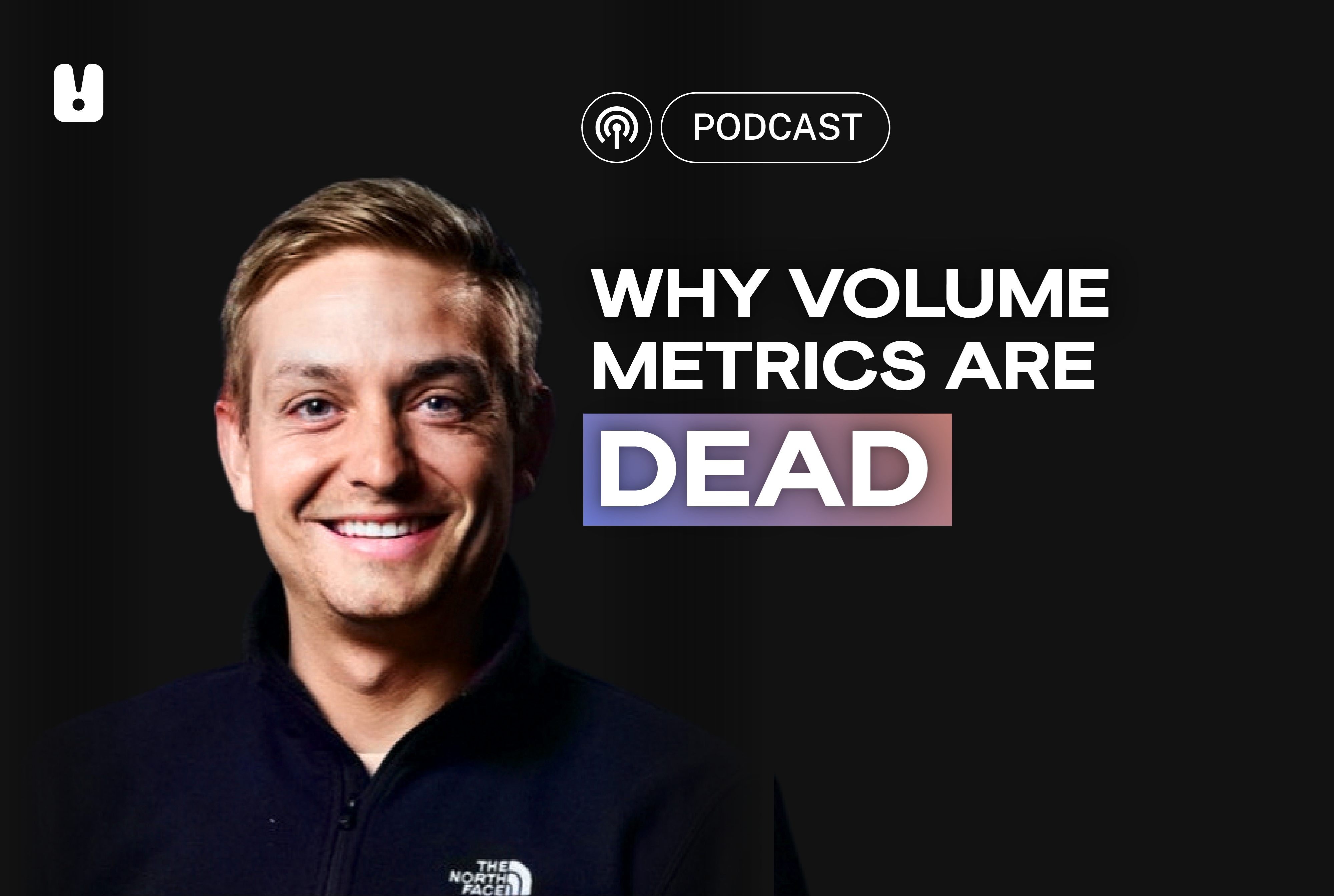
Volume Metrics Are DEAD

Last updated
03 Mar 2026
AI summary
Contents

Your SDR team is probably chasing the wrong numbers.

In the latest episode of B2B Outbound, we sat down with Chris Ritson:  three-time SDR leader, sales trainer, and the guy who's been ruining LinkedIn feeds (his words) with no-nonsense sales content for years. Chris built and scaled outbound teams at three high-growth SaaS businesses before founding his own sales training company, and he's got a lot to say about where B2B outbound is going wrong in 2026.

It's not the tools. It's not the headcount. It's the obsession with volume.

The Problem With Predictable Revenue 

Everyone loves Aaron Ross. Predictable Revenue is practically gospel in B2B sales. But Chris has a controversial take: the way most teams implement it is quietly killing their pipeline.

"With predictable revenue, the downside is that it's so numbers-focused, it forgets the prospect on the other side. Whereas relationship revenue is about: what does the buyer want? When do they want to be targeted? How do they want to be engaged?"

The difference? Predictable revenue scales numbers. Relationship revenue scales trust.

For the last decade, automation tools like Outreach and Salesloft handed SDRs the ability to blast hundreds of thousands of people with the "same personalisation" - congratulations on the new job, new funding, new whatever. 

Sound familiar? That's the problem. Everyone has the same 6 or 7 intent signals. Everyone's sending the same message. You're not standing out, you're adding to the noise.

Why "No" Isn't Actually a No

Here's the mindset shift that changed everything for Chris's best-ever rep, Tom Watson.

Tom didn't treat a no as a dead end. He treated it as a "not right now". A future meeting waiting to be booked. While other reps were scrambling for in-month meetings, Tom was quietly stacking his pipeline three months out. By the end of January, he could already forecast February with confidence:

"I'm carrying over 15 meetings that I booked in November, December and January. Factor in a 25-30% risk,  I'll get 12 show, 70% will convert. That's 150% of quota for February."

Tom made his February commission in October. Think about that.

The key? He never let a "no" be binary. Every conversation had three outcomes: yes, no, and not right now. And it was the "not right now" pile that became his competitive advantage.

The Art of the Nurture: Past, Present, Future

Most SDRs nurture badly. They either disappear for three months and cold-call again like strangers, or they spam generic marketing events that have nothing to do with the original conversation.

Chris teaches a simple framework that fixes this:

Past → Present → Future

When you follow up with someone, you must:

  1. Take them back to the past: reference your original conversation and what they told you
  2. Bring them to the present: share why you're reaching out now and what's relevant
  3. Point to the future: give them a low-friction next step, like an event or useful resource

No pushy ask. No "can we book a call this week?" Just compounding relevance, over time.

"How have you appropriately followed up between the first point of contact and now? Randomly inviting someone to a marketing event they don't care about might be doing more damage than good."

Soft Skills Are the New Competitive Advantage

Chris makes a comparison that lands hard. Thirty years ago, getting a university degree was rare,  it was a genuine edge. Then everyone got one, and it stopped meaning anything.

Hard sales skills are going the same way. Anyone can look up how to write a cold email. Anyone can get AI to write and even speak a cold call script. But what AI can't do?

"Connect the dots with what the human on the other side actually feels, and how we're reacting to that, and how we're making them feel more comfortable and trust us more."

That's the new unfair advantage. Empathy. Delayed gratification. The ability to hold a relationship over six months and close it at exactly the right moment.

How to Actually Build a Relationship Revenue Culture

For sales leaders who want to shift their team's mindset, Chris has a practical playbook:

1. Start with the big goal. Before you set a single KPI or commission plan, have the conversation with your founder or CRO. What does the business actually need this year? Build everything from there.

2. Change what you celebrate. Stop rewarding just the top biller. Run team-based leaderboards for most improved on converting nurture opportunities. Make it a skill that gets recognised, not just a nice-to-have.

3. Build it into your rhythm. Morning standups shouldn't just be "how many meetings have you got?" They should cover: how many yes, how many no, how many not-right-now - and what's the plan for each.

4. Let the team write the rules. Chris borrowed this directly from England rugby World Cup-winning coach Clive Woodward. Rather than telling his SDRs how to nurture, he left the room and let them come up with the rules themselves.

"People don't want to follow the manager's rules. But they'll absolutely follow their own."

The result? A self-governing SDR team where new starters were coached on nurture by their peers within weeks.

The KPI You're Over-Indexing On

Chris won't tell you to throw out your volume metrics entirely. But he will tell you the real problem: certain KPIs are given way too much precedence.

The fix isn't tracking less. It's asking better questions:

  • Are your primary KPIs married to the actual strategic goals of the business?
  • Are you accidentally siloing your pipe gen function because what you're measuring doesn't align with what your CRO actually needs?
  • Are you recognising the depth of relationships, not just the number of meetings booked?

If your team is permanently in the hamster wheel, you're in short-term dopamine hit territory. The compounding returns come from the reps who play the long game.

The Bottom Line

Volume metrics aren't dead because cold outreach doesn't work. They're dead because when volume is the only thing you measure, it's the only thing people optimise for,  at the expense of the very relationships that close deals.

Behind every sequence, every cadence, every "not right now" is a real person. The reps who treat them like one? They're building pipelines that fill themselves.

That's relationship revenue.

🎧 Want to hear the full conversation? Chris goes deep on frameworks, coaching culture, and the book he's writing (working title: Relationship Revenue) in this episode of B2B Outbound. If you're an SDR, SDR leader, or revenue leader trying to build a pipeline that doesn't flatline every January — this one's essential listening.

Listen to the full episode now and follow Chris on LinkedIn for daily insights, or subscribe to his weekly newsletter at the link in the show notes.

Your SDR team is probably chasing the wrong numbers.

In the latest episode of B2B Outbound, we sat down with Chris Ritson:  three-time SDR leader, sales trainer, and the guy who's been ruining LinkedIn feeds (his words) with no-nonsense sales content for years. Chris built and scaled outbound teams at three high-growth SaaS businesses before founding his own sales training company, and he's got a lot to say about where B2B outbound is going wrong in 2026.

It's not the tools. It's not the headcount. It's the obsession with volume.

The Problem With Predictable Revenue 

Everyone loves Aaron Ross. Predictable Revenue is practically gospel in B2B sales. But Chris has a controversial take: the way most teams implement it is quietly killing their pipeline.

"With predictable revenue, the downside is that it's so numbers-focused, it forgets the prospect on the other side. Whereas relationship revenue is about: what does the buyer want? When do they want to be targeted? How do they want to be engaged?"

The difference? Predictable revenue scales numbers. Relationship revenue scales trust.

For the last decade, automation tools like Outreach and Salesloft handed SDRs the ability to blast hundreds of thousands of people with the "same personalisation" - congratulations on the new job, new funding, new whatever. 

Sound familiar? That's the problem. Everyone has the same 6 or 7 intent signals. Everyone's sending the same message. You're not standing out, you're adding to the noise.

Why "No" Isn't Actually a No

Here's the mindset shift that changed everything for Chris's best-ever rep, Tom Watson.

Tom didn't treat a no as a dead end. He treated it as a "not right now". A future meeting waiting to be booked. While other reps were scrambling for in-month meetings, Tom was quietly stacking his pipeline three months out. By the end of January, he could already forecast February with confidence:

"I'm carrying over 15 meetings that I booked in November, December and January. Factor in a 25-30% risk,  I'll get 12 show, 70% will convert. That's 150% of quota for February."

Tom made his February commission in October. Think about that.

The key? He never let a "no" be binary. Every conversation had three outcomes: yes, no, and not right now. And it was the "not right now" pile that became his competitive advantage.

The Art of the Nurture: Past, Present, Future

Most SDRs nurture badly. They either disappear for three months and cold-call again like strangers, or they spam generic marketing events that have nothing to do with the original conversation.

Chris teaches a simple framework that fixes this:

Past → Present → Future

When you follow up with someone, you must:

  1. Take them back to the past: reference your original conversation and what they told you
  2. Bring them to the present: share why you're reaching out now and what's relevant
  3. Point to the future: give them a low-friction next step, like an event or useful resource

No pushy ask. No "can we book a call this week?" Just compounding relevance, over time.

"How have you appropriately followed up between the first point of contact and now? Randomly inviting someone to a marketing event they don't care about might be doing more damage than good."

Soft Skills Are the New Competitive Advantage

Chris makes a comparison that lands hard. Thirty years ago, getting a university degree was rare,  it was a genuine edge. Then everyone got one, and it stopped meaning anything.

Hard sales skills are going the same way. Anyone can look up how to write a cold email. Anyone can get AI to write and even speak a cold call script. But what AI can't do?

"Connect the dots with what the human on the other side actually feels, and how we're reacting to that, and how we're making them feel more comfortable and trust us more."

That's the new unfair advantage. Empathy. Delayed gratification. The ability to hold a relationship over six months and close it at exactly the right moment.

How to Actually Build a Relationship Revenue Culture

For sales leaders who want to shift their team's mindset, Chris has a practical playbook:

1. Start with the big goal. Before you set a single KPI or commission plan, have the conversation with your founder or CRO. What does the business actually need this year? Build everything from there.

2. Change what you celebrate. Stop rewarding just the top biller. Run team-based leaderboards for most improved on converting nurture opportunities. Make it a skill that gets recognised, not just a nice-to-have.

3. Build it into your rhythm. Morning standups shouldn't just be "how many meetings have you got?" They should cover: how many yes, how many no, how many not-right-now - and what's the plan for each.

4. Let the team write the rules. Chris borrowed this directly from England rugby World Cup-winning coach Clive Woodward. Rather than telling his SDRs how to nurture, he left the room and let them come up with the rules themselves.

"People don't want to follow the manager's rules. But they'll absolutely follow their own."

The result? A self-governing SDR team where new starters were coached on nurture by their peers within weeks.

The KPI You're Over-Indexing On

Chris won't tell you to throw out your volume metrics entirely. But he will tell you the real problem: certain KPIs are given way too much precedence.

The fix isn't tracking less. It's asking better questions:

  • Are your primary KPIs married to the actual strategic goals of the business?
  • Are you accidentally siloing your pipe gen function because what you're measuring doesn't align with what your CRO actually needs?
  • Are you recognising the depth of relationships, not just the number of meetings booked?

If your team is permanently in the hamster wheel, you're in short-term dopamine hit territory. The compounding returns come from the reps who play the long game.

The Bottom Line

Volume metrics aren't dead because cold outreach doesn't work. They're dead because when volume is the only thing you measure, it's the only thing people optimise for,  at the expense of the very relationships that close deals.

Behind every sequence, every cadence, every "not right now" is a real person. The reps who treat them like one? They're building pipelines that fill themselves.

That's relationship revenue.

🎧 Want to hear the full conversation? Chris goes deep on frameworks, coaching culture, and the book he's writing (working title: Relationship Revenue) in this episode of B2B Outbound. If you're an SDR, SDR leader, or revenue leader trying to build a pipeline that doesn't flatline every January — this one's essential listening.

Listen to the full episode now and follow Chris on LinkedIn for daily insights, or subscribe to his weekly newsletter at the link in the show notes.

contributors
Expertise
No items found.
No items found.
No items found.
No items found.
other Articles

Continue reading

8
min read
Published
27 Feb 2026
Why Client Retention is the Best Outbound Sales Strategy
Sales development and strategy

Why Client Retention is the Best Outbound Sales Strategy

Nia yu

Client Success Director
Last updated
27 Feb 2026
9
min read
Published
17 Feb 2026
How We Orchestrate Signal-Driven Sales Development
Sales development and strategy

How We Orchestrate Signal-Driven Sales Development

Last updated
17 Feb 2026

Subscribe to Punch! newsletter

A monthly dose of Sales Intelligence, delivered straight to your inbox

Thank you! Your submission has been received!
Oops! Something went wrong while submitting the form.