Back to all blogs
Blog Details

Subscribe to Punch! newsletter

Stay in the loop with updates, ideas, and resources.

Thank you! Your submission has been received!
Oops! Something went wrong while submitting the form.
5 min read
Published
21 Aug 2026
5 min read
Published
21 Aug 2026

What Is GTM Orchestration?

Chris Muldoon

Chief Executive Officer
Last updated
21 Aug 2026
AI summary
Contents

Five years ago, I assumed the tools would have sorted themselves out by now. They have not, and the stack only got bigger while the gaps got wider.

GTM orchestration is what fixes this. In the audits I run, the AI-enabled label rarely matches what is actually wired together behind it.

The job behind that fix is GTM engineering. It is still young as a discipline.

What Does GTM Orchestration Mean?

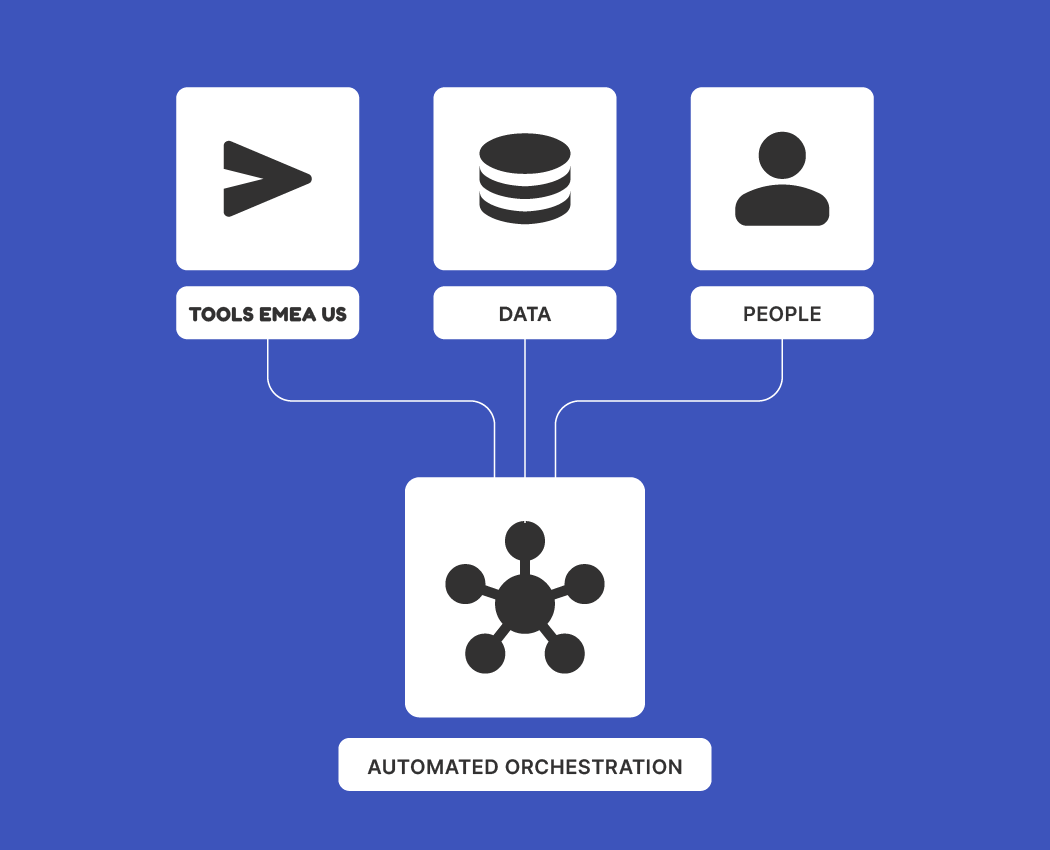
GTM engineering is the job. It means wiring outbound, inbound, and rev ops (revenue operations) together so every function runs off the same signals instead of three separate guesses. GTM orchestration is the result, one connected system instead of a stack of tools that never talk to each other.

In practice, that means data moving to whoever needs it, exactly when they need it, without someone forwarding a spreadsheet at 9pm.

If your sales, marketing, and customer success teams sit on separate systems, and none of them can see what the others are doing, that is three teams working in parallel, hoping the numbers add up at the end of the quarter.

The same logic applies across outbound, inbound, and rev ops, not just sales and marketing. Every function needs to work off the same signal instead of its own version filtered through whichever tool it happens to use.

Why Your Outbound Stack Breaks Without It

GTM Modernisation, where we audit a client’s stack and rebuild what is broken, is where I see the same pattern most often. A company buys an enrichment tool, then a sequencer, then an intent platform, and never connects any of them to each other. The SDR becomes the connective tissue, manually stitching the story together at 8pm, wondering why she chose sales over teaching yoga.

The pattern shows up outside our own audits too. HubSpot’s own research found that 45% of sales professionals feel overwhelmed by how many tools sit in their stack. In my own experience running GTM Modernisation audits, a stack nobody fully understands rarely gets used end to end. Reps default back to building lists by hand, including through code-based tools often built on MCP (Model Context Protocol, the connector that lets AI tools plug into existing systems), because at least that part they can control. A faster way to build a list does not fix the underlying problem. It just produces the same result more quickly.

Bolting an AI feature onto a broken process gives you a faster broken process. The branding improves even if the outcome stays exactly the same.

Chris Muldoon, who has spent years building and running SDR teams at Punch!, made a related point when we talked this piece through. His view: stop leading with the tool purchase. Talk to the sales team first, find the specific insight that would change how they sell, then build backwards from that.

Why Most B2B Sales Stacks Stop Working As They Grow

Small stacks are forgiving. Ten leads a week, one rep, one spreadsheet, and nobody notices the seams.

Growth changes that fast. More reps, more territories, more product lines, and the spreadsheet becomes five spreadsheets nobody fully trusts. Every new hire builds their own version of “the process” because there was never one true process to inherit.

A big list is not the same as a refined one. A refined list is filtered by ICP (ideal customer profile) and built territory by territory, with the context that actually matters attached to every name on it, and that is not something a one-off export solves.

What makes a list “context-rich” in practice is knowing not just the account and the role, but the specific trigger that makes this month different from last month for that account.

Chris flagged the same failure point from the buyer’s side. Generic, persona-based sequences fall flat because nobody feels spoken to directly. A template built for “Head of Marketing” does not know that your Head of Marketing just reposted the same job three times in six months (a signal to build into your outreach, not just notice in passing).

That reposted job listing is buyer intelligence in its simplest form, the exact kind of specific signal that generic intent data misses every time.

Why Connected Tools Beat A Pile Of Standalone Ones

Every sales tool looks incredible in a demo, and that is the trick. Nobody demos the part where it has to talk to your CRM, your dialler, your marketing automation platform, and the three spreadsheets one person on the finance team still swears by.

Whatever the tool, Clay included, the job stays the same. Give the team one place to see the data, enrich it, manipulate it, and connect it to everything else running the go-to-market motion. Clay is a good example, and one of the sharper enrichment tools on the market right now, but even Clay is only as useful as what it feeds into. Rich data flowing into a CRM nobody trusts is just a demo trick.

The GTM Engineer’s job is building one unified system that connects everybody. That is exactly what our GTM Modernisation programme exists to do. One GTM Engineer, embedded in the business, auditing what is disconnected and rebuilding it so the tools function as one system rather than a stack of expensive apps that occasionally email each other.

What A Coordinated Outbound Motion Looks Like

In our Human SDR managed services, an SDR’s day is calling, and nothing else, with no list building at 7am and no CRM admin eating the hour before the day even starts. Every reason to call is already sitting in the dialler before the phone is in their hand.

The same logic applies to account executives. Nobody should be doing their own manual research to prepare for a meeting. A brief, booked and ready, does that job instead, a PDF with everything an AE needs already pulled together.

That is a brief the AE can read in the two minutes before the call, already put together, no scrambling through LinkedIn required. Every call our SDRs make is signal-informed too, so nobody on either side of the phone is guessing why someone might care.

Where To Start

You will not fix this by buying one more tool, whatever it is.

Start with the audit I keep running in GTM Modernisation work: which signals really predict a deal in your business? Generic intent data and firmographic filters like “companies with 500 or more employees” miss this. What matters is the specific, unique-to-you trigger that tells you someone is ready to buy, in your market, right now.

That is the entire premise behind HotSauce, Punch!’s Unique-to-You (U2U) Signal Intelligence platform. It watches your market for signals unique to your business and triggers outreach the moment one fires, with no manual list building required.

Once a signal exists, orchestration is what carries it through the system. Agentic GTM, our AI agent outreach layer, acts on it across five channels: email, LinkedIn, personalised microsites, handwritten postcards, and person-level ads, running each touch itself rather than waiting for a human to queue it. Human SDR managed services act on it over the phone. Nothing sits in a spreadsheet waiting for someone to notice it.

Together, HotSauce, Agentic GTM, and Human SDR managed services make up the Pipeline Generation system.

If the deeper problem is your tech stack itself, bloated, misaligned, patched together by three different people over five years, that is a GTM Modernisation conversation. One GTM Engineer runs the audit and rebuilds the system.

Get the stack wrong and the activity numbers can look great while the actual measure of outbound success tells a completely different story.

Five years ago, I assumed the tools would have sorted themselves out by now. They have not, and the stack only got bigger while the gaps got wider.

GTM orchestration is what fixes this. In the audits I run, the AI-enabled label rarely matches what is actually wired together behind it.

The job behind that fix is GTM engineering. It is still young as a discipline.

What Does GTM Orchestration Mean?

GTM engineering is the job. It means wiring outbound, inbound, and rev ops (revenue operations) together so every function runs off the same signals instead of three separate guesses. GTM orchestration is the result, one connected system instead of a stack of tools that never talk to each other.

In practice, that means data moving to whoever needs it, exactly when they need it, without someone forwarding a spreadsheet at 9pm.

If your sales, marketing, and customer success teams sit on separate systems, and none of them can see what the others are doing, that is three teams working in parallel, hoping the numbers add up at the end of the quarter.

The same logic applies across outbound, inbound, and rev ops, not just sales and marketing. Every function needs to work off the same signal instead of its own version filtered through whichever tool it happens to use.

Why Your Outbound Stack Breaks Without It

GTM Modernisation, where we audit a client’s stack and rebuild what is broken, is where I see the same pattern most often. A company buys an enrichment tool, then a sequencer, then an intent platform, and never connects any of them to each other. The SDR becomes the connective tissue, manually stitching the story together at 8pm, wondering why she chose sales over teaching yoga.

The pattern shows up outside our own audits too. HubSpot’s own research found that 45% of sales professionals feel overwhelmed by how many tools sit in their stack. In my own experience running GTM Modernisation audits, a stack nobody fully understands rarely gets used end to end. Reps default back to building lists by hand, including through code-based tools often built on MCP (Model Context Protocol, the connector that lets AI tools plug into existing systems), because at least that part they can control. A faster way to build a list does not fix the underlying problem. It just produces the same result more quickly.

Bolting an AI feature onto a broken process gives you a faster broken process. The branding improves even if the outcome stays exactly the same.

Chris Muldoon, who has spent years building and running SDR teams at Punch!, made a related point when we talked this piece through. His view: stop leading with the tool purchase. Talk to the sales team first, find the specific insight that would change how they sell, then build backwards from that.

Why Most B2B Sales Stacks Stop Working As They Grow

Small stacks are forgiving. Ten leads a week, one rep, one spreadsheet, and nobody notices the seams.

Growth changes that fast. More reps, more territories, more product lines, and the spreadsheet becomes five spreadsheets nobody fully trusts. Every new hire builds their own version of “the process” because there was never one true process to inherit.

A big list is not the same as a refined one. A refined list is filtered by ICP (ideal customer profile) and built territory by territory, with the context that actually matters attached to every name on it, and that is not something a one-off export solves.

What makes a list “context-rich” in practice is knowing not just the account and the role, but the specific trigger that makes this month different from last month for that account.

Chris flagged the same failure point from the buyer’s side. Generic, persona-based sequences fall flat because nobody feels spoken to directly. A template built for “Head of Marketing” does not know that your Head of Marketing just reposted the same job three times in six months (a signal to build into your outreach, not just notice in passing).

That reposted job listing is buyer intelligence in its simplest form, the exact kind of specific signal that generic intent data misses every time.

Why Connected Tools Beat A Pile Of Standalone Ones

Every sales tool looks incredible in a demo, and that is the trick. Nobody demos the part where it has to talk to your CRM, your dialler, your marketing automation platform, and the three spreadsheets one person on the finance team still swears by.

Whatever the tool, Clay included, the job stays the same. Give the team one place to see the data, enrich it, manipulate it, and connect it to everything else running the go-to-market motion. Clay is a good example, and one of the sharper enrichment tools on the market right now, but even Clay is only as useful as what it feeds into. Rich data flowing into a CRM nobody trusts is just a demo trick.

The GTM Engineer’s job is building one unified system that connects everybody. That is exactly what our GTM Modernisation programme exists to do. One GTM Engineer, embedded in the business, auditing what is disconnected and rebuilding it so the tools function as one system rather than a stack of expensive apps that occasionally email each other.

What A Coordinated Outbound Motion Looks Like

In our Human SDR managed services, an SDR’s day is calling, and nothing else, with no list building at 7am and no CRM admin eating the hour before the day even starts. Every reason to call is already sitting in the dialler before the phone is in their hand.

The same logic applies to account executives. Nobody should be doing their own manual research to prepare for a meeting. A brief, booked and ready, does that job instead, a PDF with everything an AE needs already pulled together.

That is a brief the AE can read in the two minutes before the call, already put together, no scrambling through LinkedIn required. Every call our SDRs make is signal-informed too, so nobody on either side of the phone is guessing why someone might care.

Where To Start

You will not fix this by buying one more tool, whatever it is.

Start with the audit I keep running in GTM Modernisation work: which signals really predict a deal in your business? Generic intent data and firmographic filters like “companies with 500 or more employees” miss this. What matters is the specific, unique-to-you trigger that tells you someone is ready to buy, in your market, right now.

That is the entire premise behind HotSauce, Punch!’s Unique-to-You (U2U) Signal Intelligence platform. It watches your market for signals unique to your business and triggers outreach the moment one fires, with no manual list building required.

Once a signal exists, orchestration is what carries it through the system. Agentic GTM, our AI agent outreach layer, acts on it across five channels: email, LinkedIn, personalised microsites, handwritten postcards, and person-level ads, running each touch itself rather than waiting for a human to queue it. Human SDR managed services act on it over the phone. Nothing sits in a spreadsheet waiting for someone to notice it.

Together, HotSauce, Agentic GTM, and Human SDR managed services make up the Pipeline Generation system.

If the deeper problem is your tech stack itself, bloated, misaligned, patched together by three different people over five years, that is a GTM Modernisation conversation. One GTM Engineer runs the audit and rebuilds the system.

Get the stack wrong and the activity numbers can look great while the actual measure of outbound success tells a completely different story.

contributors
Chris Muldoon
Chris Muldoon
Chief Executive Officer
Expertise
No items found.
other Articles

Continue reading

6
min read
Published
07 Aug 2026
Why Human SDRs Still Win in Regional Markets
No items found.

Why Human SDRs Still Win in Regional Markets

Last updated
07 Aug 2026
min read
Published
31 Jul 2026
What is HotSauce?
No items found.

What is HotSauce?

Last updated
31 Jul 2026

Subscribe to Punch! newsletter

A monthly dose of Sales Intelligence, delivered straight to your inbox

Thank you! Your submission has been received!
Oops! Something went wrong while submitting the form.